

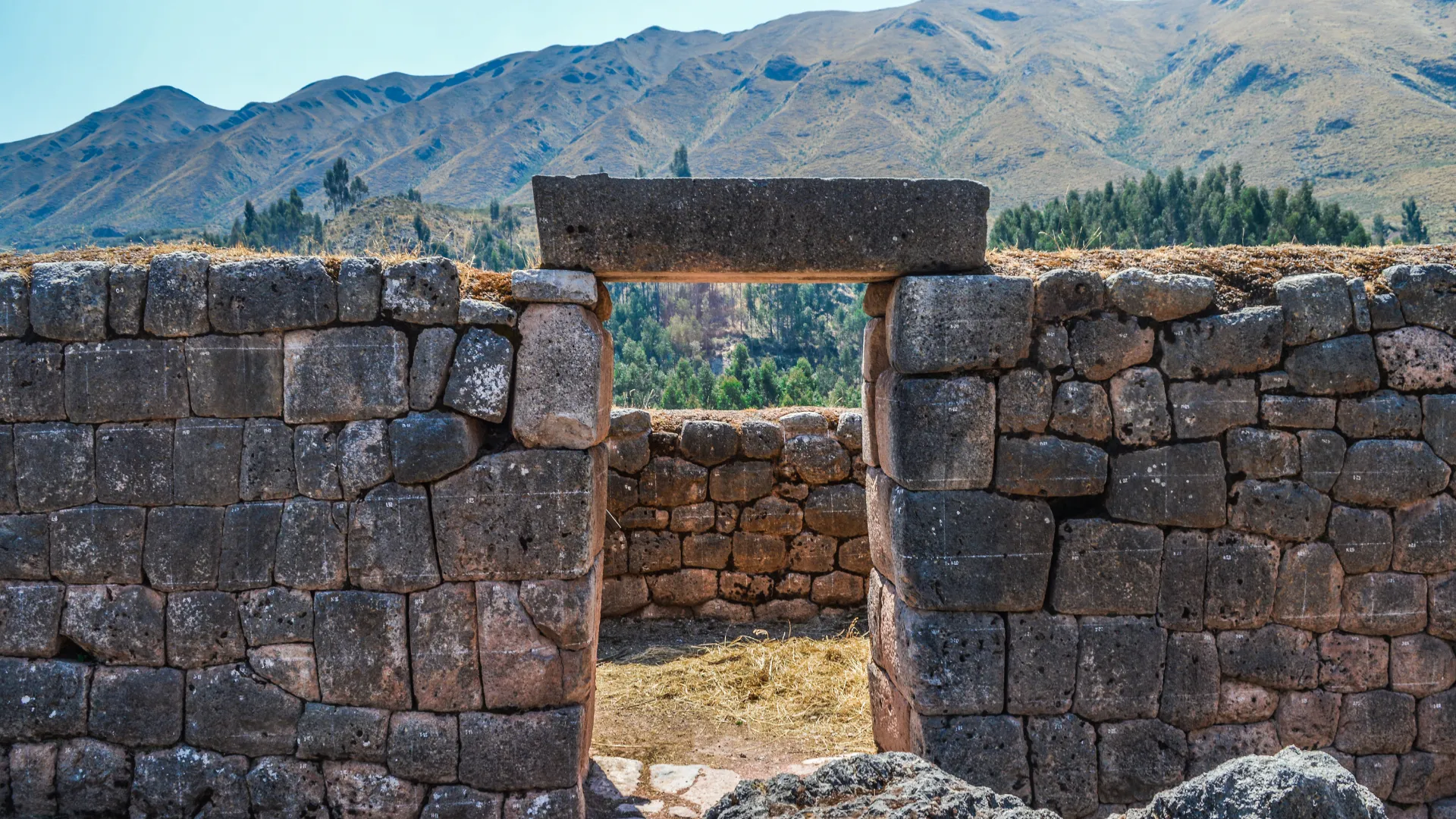
The Qoricancha was the most important temple of the Incas, dedicated to the Sun, and the Convent of Santo Domingo was built on its walls. It is about 500 m from the Plaza de Armas of Cusco, on the corner of Avenida El Sol and Santo Domingo street. Today it is visited as a museum: entry costs S/ 15 for adults and is not part of the Tourist Ticket, although the Site Museum beneath its esplanade is. Here are its history, what to see, prices, opening hours and the Inti Raymi.
Data as of 26 October 2026. Entry price checked by Machupicchu Travel Cataleya in October 2026 and opening hours published by PromPerú (August 2026); confirm them at the ticket office. The official sources are listed at the end of the article.
- S/ 15entry for adults; reduced fare for students
- 15th centurybuilt under the Inca Pachacuteq
- 500 mfrom the Plaza de Armas, about 6 minutes on foot
What the Qoricancha was
Its name comes from the Quechua qori, gold, and kancha, enclosure: the “golden enclosure”. According to MINCETUR, it was the main religious temple of the Inca Empire and the center of the worship of the god Inti, the Sun: at once a temple, an astronomical observatory, a ceremonial center and a symbol of power. It was built in the 15th century under the Inca Pachacuteq, probably on a smaller ceremonial center that he enlarged and embellished.
The enclosure was lined with gold plates and had gold and silver figures of the sun, the moon, the stars and animals. Besides the enclosure of the Sun, the complex included spaces for Killa (the Moon), Ch’aska (the stars), Illapa (lightning and thunder), Pachamama (Mother Earth) and Wiracocha, and sacred gardens with gold and silver replicas of Andean plants and animals, water channels and ceremonial fountains.
The conquest and the Convent of Santo Domingo
With the arrival of the Spaniards, the Qoricancha was looted: the gold plates and valuable objects were removed, and many were melted down. Between 1534 and 1538 the Convent of Santo Domingo was built on its walls, and on 23 November 1538 Juan Pizarro ceded it to the Dominican order, which has run it ever since, according to MINCETUR. The earthquakes of 1650 and 1950 badly damaged the colonial buildings but left much of the Inca structure standing. After the 1950 earthquake, work began to recover and restore the monuments of Cusco, according to UNESCO, which mentions the Temple of the Sun among the city’s Inca works of exceptional stonework.
What to see at the Qoricancha
- The Inca walls: the imperial stonework, with stones fitted together without mortar and trapezoidal walls slightly inclined inwards, which contrasts with the colonial construction of the convent.
- Trapezoidal niches and windows: according to MINCETUR, many are aligned with the solstices and equinoxes.
- The sacred enclosures where the heavenly bodies and the forces of nature were worshipped, together with ceremonial channels and fountains.
- The convent museum: five galleries with objects, paintings, sculptures, representations of the Inca deities and wood carvings, and a scale model of what the temple would have looked like, according to PromPerú.
- The esplanade facing Avenida El Sol, the stage for the first act of the Inti Raymi.
The site offers guided visits in several languages, according to MINCETUR. You can also visit it with a guide on the Cusco City Tour, which includes the Qoricancha, the Cathedral and the Inca sites on the outskirts.
Tickets and opening hours
| Entry | Opening hours | |
|---|---|---|
| Qoricancha and Convent of Santo Domingo | S/ 15 adults; reduced fare for students. Not included in the Tourist Ticket | Monday to Saturday 8:30 – 17:30; Sunday 14:00 – 17:00 |
| Museo de Sitio Qorikancha (Qorikancha Site Museum) | Tourist Ticket: circuit II partial ticket (S/ 70 foreigners, 2 days; S/ 40 Peruvians, 1 day) or full ticket (S/ 130 / S/ 70, 10 days) | Check on site |
S/ 15 is the price our groups pay in October 2026; PromPerú and MINCETUR still publish S/ 20 for adults and S/ 10 for students. The temple’s opening hours are those published by PromPerú in August 2026; MINCETUR records 8:00 to 17:30. According to MINCETUR, children under 9 do not pay and people from Cusco enter free with their DNI (national ID). Confirm the price and opening hours at the ticket office.
The Qorikancha Site Museum is next to the temple, beneath the esplanade, and is a separate place: it displays archaeological pieces, ceramics, textiles and tools found during research at the complex, from the pre-Inca, Inca and colonial periods, according to COSITUC. You enter with circuit II of the Tourist Ticket, together with other museums in the city, Tipón and Pikillaqta (all fares in Cusco Tourist Ticket 2026). The regulations of the new Tourist Ticket Law (Law 32586) are still under consultation, so those fares could change.
The Qoricancha at the Inti Raymi
Every 24 June, the Festival of the Sun begins at the Qoricancha: the Inca, the qoya (queen) and the imperial retinue greet the Sun on the esplanade, around 9:00 according to the 2026 program of the Cusco Municipal Festivities Company (EMUFEC). The celebration then continues in the Plaza de Armas and ends at Sacsayhuamán. In 2026 the Qoricancha grandstand had 350 seats, at S/ 235 for general admission and S/ 150 for Peruvians, and it sold out. Tickets for 2027 have not been announced yet: buy them only through EMUFEC’s official channel. To plan your trip, read Peru public holidays 2027: long weekends to visit Cusco and Machu Picchu.
Inca ritual roads also started from the Qoricancha: the Decentralized Directorate of Culture of Cusco (DDC) restored 13 km of the road that links it with Wanakauri hill.
Tips for your visit
- Go from Monday to Saturday if you can: on Sundays it only opens in the afternoon.
- Bring cash in soles, and your student card if you pay the student fare.
- Combine it with the Cathedral, about 6 minutes away on foot, and with the Site Museum if you have the Tourist Ticket.
- It is a convent of the Dominican order: respect the restricted areas and the staff’s instructions.
To see the rest of the city, read things to do in Cusco.
Official sources (checked in October 2026):
- MINCETUR tourism inventory: Qoricancha Archaeological Site (July 2025). PromPerú: museums in Cusco (August 2026). UNESCO, City of Cuzco.
- Qorikancha Site Museum and Tourist Ticket: COSITUC and fares; El Peruano (regulations of Law 32586).
- Inti Raymi: EMUFEC, 2026 prices and Radio Nacional (June 2026). Ritual road: DDC Cusco.
Frequently asked questions
How much is the entry to the Qoricancha?
S/ 15 for adults, the price our groups pay in October 2026 (PromPerú and MINCETUR still publish S/ 20). Students have a reduced fare. It is not included in the Cusco Tourist Ticket. Confirm the price at the ticket office.
What are the opening hours of the Qoricancha?
Monday to Saturday from 8:30 to 17:30 and Sundays from 14:00 to 17:00, according to PromPerú (August 2026).
Does the Tourist Ticket include the Qoricancha?
It does not include the temple, which is run by the Dominican order and has its own entry ticket. It does include the Qorikancha Site Museum, beneath the esplanade, in circuit II.
What does Qoricancha mean?
It comes from the Quechua qori, gold, and kancha, enclosure: "golden enclosure". Its walls were lined with gold plates.
Who built the Qoricancha?
According to MINCETUR, it was built in the 15th century under the Inca Pachacuteq, probably on an earlier ceremonial center. The Convent of Santo Domingo was built on its walls between 1534 and 1538.
Where is the Qoricancha?
On the corner of Avenida El Sol and Santo Domingo street, about 500 m from the Plaza de Armas of Cusco, some 6 minutes on foot.
What time does the Inti Raymi start at the Qoricancha?
On 24 June, around 9:00, according to the 2026 EMUFEC program. The celebration then continues in the Plaza de Armas and at Sacsayhuamán.