

Cusco, at an altitude of 3,399 m (11,152 ft), was the capital of the Tawantinsuyu and has been a UNESCO World Heritage Site since 1983. In the city you can see the blend of Inca and colonial: the Plaza de Armas, the Cathedral, the Qoricancha, Hatun Rumiyoq street and the San Blas neighborhood; on its outskirts, Sacsayhuamán and three other Inca sites; and to the south, Tipón and Pikillaqta. Each place has its own entry ticket: here are the top things to do in Cusco, the ticket you need for each one, the official opening hours and how many days to plan.
Data as of 26 October 2026. Prices and opening hours are those published by COSITUC, the Decentralized Directorate of Culture of Cusco (DDC) and the MINCETUR tourism inventory; confirm them at the ticket office. The official sources are listed at the end of the article.
- 3,399 maltitude of the city of Cusco (11,152 ft)
- 1983year UNESCO inscribed it as a World Heritage Site
- 16 sitesincluded in the full Tourist Ticket (S/ 130 for foreigners)
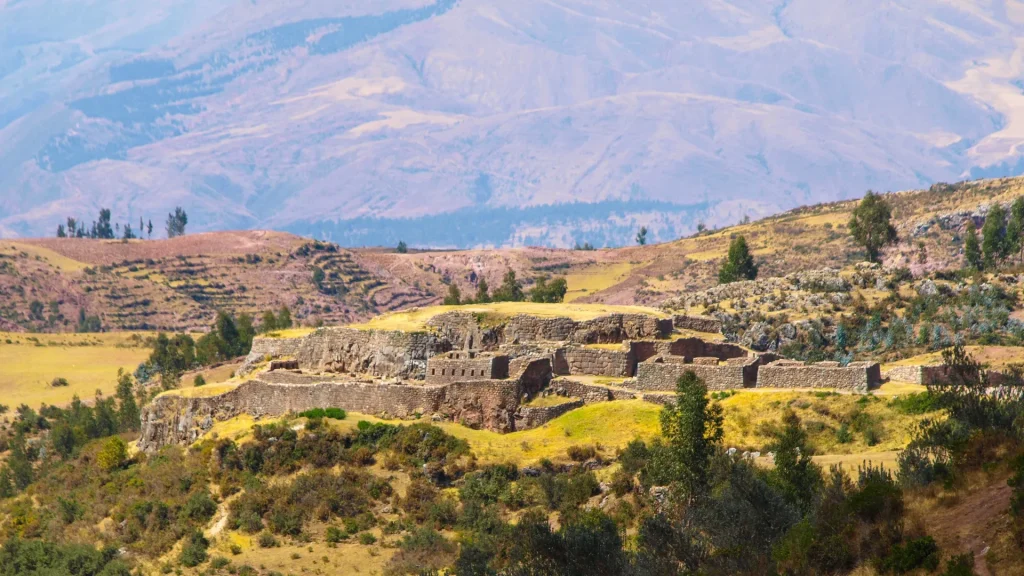
Why Cusco is a World Heritage Site
According to UNESCO, the city was redesigned in the 15th century under Pachacuteq and became the Inca capital. UNESCO inscribed it in 1983 as a unique testimony to the Inca civilization, the seat of government of the Tawantinsuyu, and as an exceptional example of the meeting of two cultures, Inca and Spanish: many colonial churches and mansions stand on Inca walls. The Constitution of Peru recognizes it as the country’s historic capital. By tradition, the name Qosqo has been translated as “navel of the world”, although its origin is still debated.
The historic center
Plaza de Armas
It is the heart of the city and the starting point for exploring it on foot. The big celebrations take place here: the second act of the Inti Raymi, which is free, and the Corpus Christi procession, which goes around the square.
Cusco Cathedral
The Cathedral Basilica was built between 1559 and 1654 on the former Inca palace of Kiswarkancha, largely with stone brought from Sacsayhuamán, according to MINCETUR. It houses the image of the Señor de los Temblores (Lord of the Earthquakes), patron of Cusco, and an Andean-style Última Cena (Last Supper). It is run by the Archdiocese of Cusco, with its own ticket that is not part of the Tourist Ticket: the fare registered by MINCETUR is S/ 25 for adults and S/ 12.50 for students, from 10:00 to 18:00. Confirm the current price at the ticket office.
Qoricancha (Temple of the Sun and Convent of Santo Domingo)
It was the main temple of the Incas, dedicated to the worship of the Sun (Inti), built in the 15th century under Pachacuteq. Between 1534 and 1538 the Convent of Santo Domingo was built on its walls, and the Inca walls withstood the earthquakes of 1650 and 1950, according to MINCETUR. It is about 500 m from the Plaza de Armas. It is run by the Dominican order, with its own entry ticket: S/ 20 for adults and S/ 10 for students, Monday to Saturday from 8:30 to 17:30 and Sundays from 14:00 to 17:00 (PromPerú, 2026). The Qoricancha Site Museum, next to the esplanade, is included in the Tourist Ticket.
Hatun Rumiyoq street and the Twelve-Angled Stone
On this street, a few blocks from the square, is the Inca wall with the famous piedra de los doce ángulos (Twelve-Angled Stone). According to the DDC Cusco, that wall is part of the base of the Archbishop’s Palace. It is a public street: you can see it without a ticket. Damaging the wall is a crime against cultural heritage, so do not touch it or lean on it.
San Blas neighborhood
It is the artisans’ neighborhood, about 500 m from the Plaza de Armas, up steep streets. Its church, from 1563, was built on a former Inca shrine and has a Baroque pulpit carved in wood, according to MINCETUR. Check whether the church is open to visitors before you go.
Mercado San Pedro
Cusco’s central market, from the 1920s, was declared Cultural Heritage of the Nation in 2024 by the Ministry of Culture. It is the place to try juices, fruit and local food; it opens from early in the morning until the afternoon.
Museums in the city
Six places in the city are included in circuit II of the Tourist Ticket: the Qoricancha Site Museum, the Regional Historical Museum (in the mansion known as Casa Garcilaso), the Museum of Popular Art, the Museum of Contemporary Art, the Pachacuteq Monument, a bronze statue on top of a lookout tower, and the Centro Qosqo de Arte Nativo, with an evening show of music and dance.
Not included in the ticket are the Museo Inka, of the San Antonio Abad University, on Cuesta del Almirante, and the Museo de Arte Precolombino (Pre-Columbian Art Museum), on Plaza de las Nazarenas, with pieces from the Museo Larco collection, open every day from 8:00 to 22:00 according to its website. Both charge their own entry fee.
Sacsayhuamán and the Inca sites on the outskirts
Full guide, with its sectors, tickets and Inti Raymi: Sacsayhuamán: what to see, tickets and hours.
Sacsayhuamán is about 2 km north of the Plaza de Armas, some 20 minutes on foot along Suecia street, uphill. The DDC Cusco describes it as the “Casa del Sol” (House of the Sun) of Hanan Qosqo (upper Cusco), begun under Pachacuteq. According to MINCETUR, the blocks of its main walls are thought to weigh between 90 and 125 tonnes, and many of its stones were reused in colonial churches and houses. Its archaeological park, covering 2,997 hectares, brings together 96 sites, and it is the main stage of the Inti Raymi every 24 June.
Three other circuit I sites are in the same park:
- Q’enqo, about 4 km from the center.
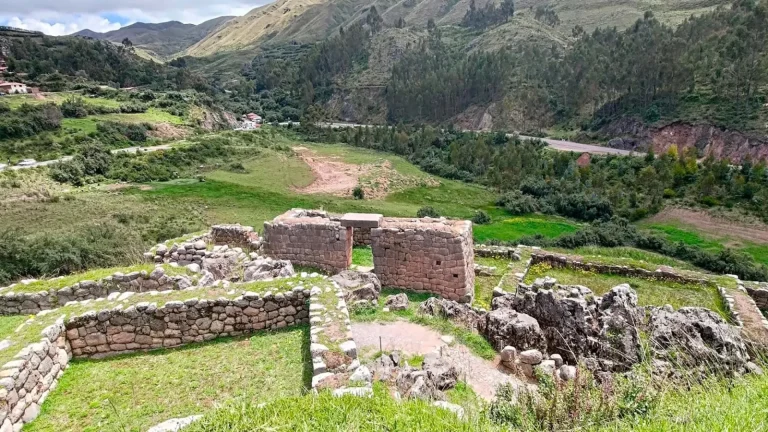
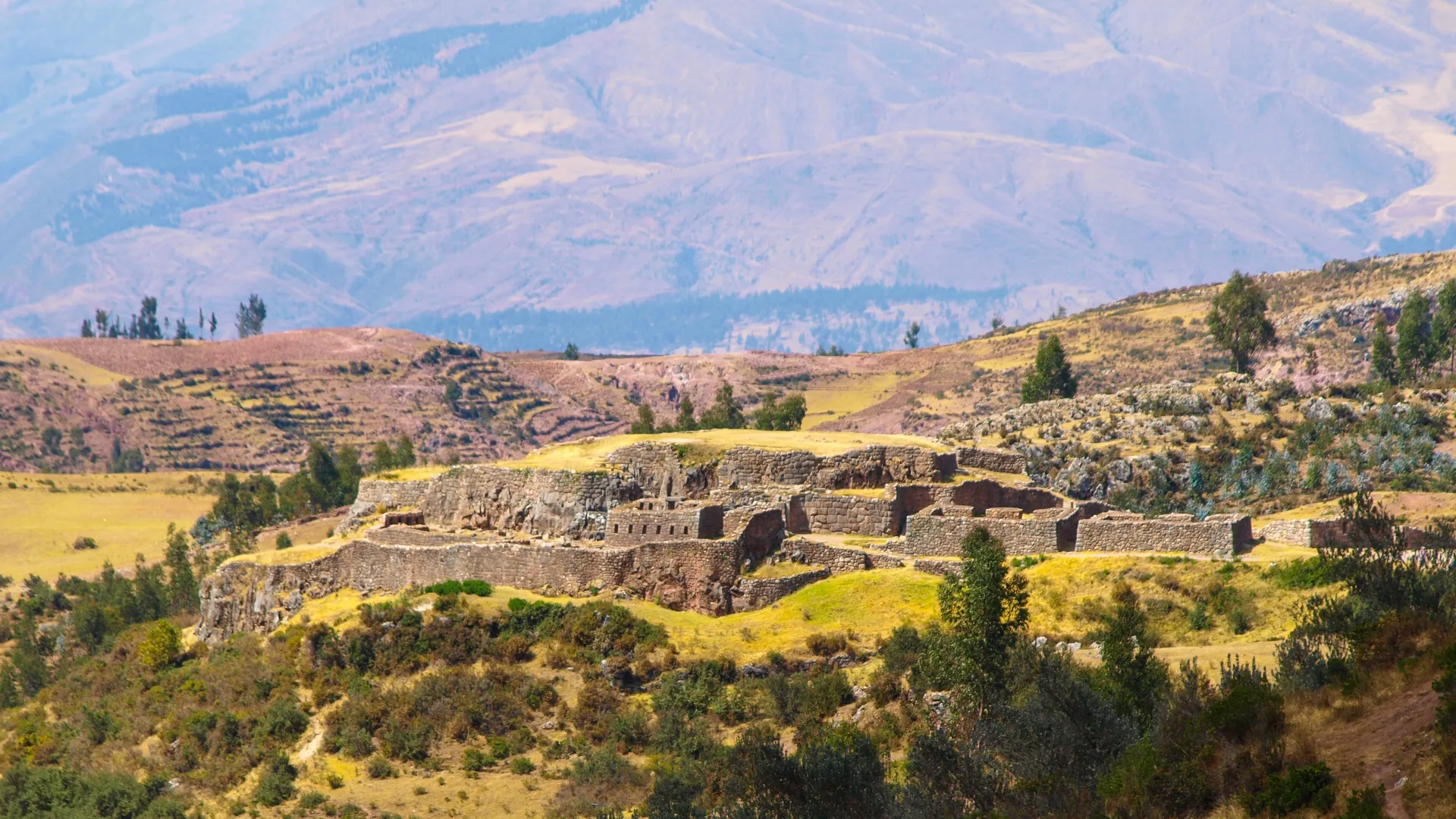
- Puka Pukara, the “Red Fortress”, about 7 km away, a checkpoint that is thought to have protected Tambomachay.
- Tambomachay, about 8 km away, with fine stonework and water channels, linked to the worship of water.
The park is open from 7:00 to 17:30, according to the DDC Cusco. The four sites are visited with the circuit I partial ticket or with the full ticket. The most practical option is the half-day Cusco City Tour, which covers the Cathedral, the Qoricancha and these four sites with a guide and transport; or you can ride through them on horseback, from Puka Pukara to Sacsayhuamán, on the Cusco City Tour on horseback.
The South Valley: Tipón, Pikillaqta and Andahuaylillas
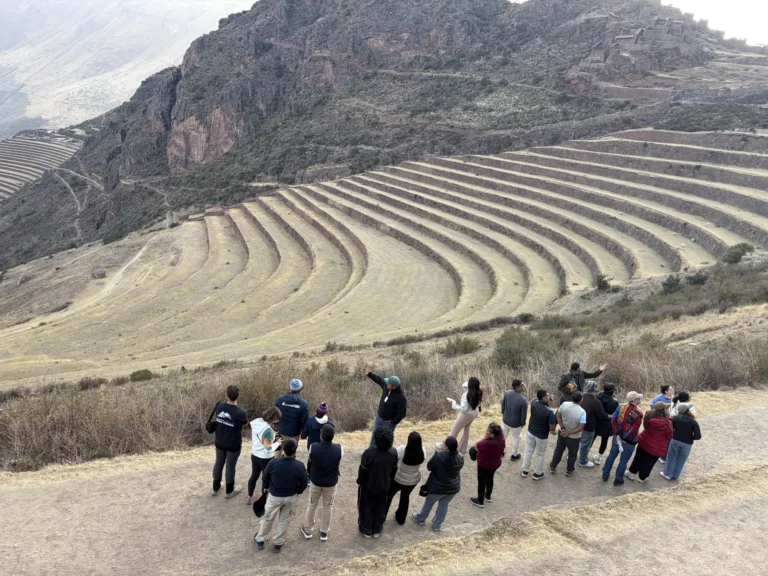
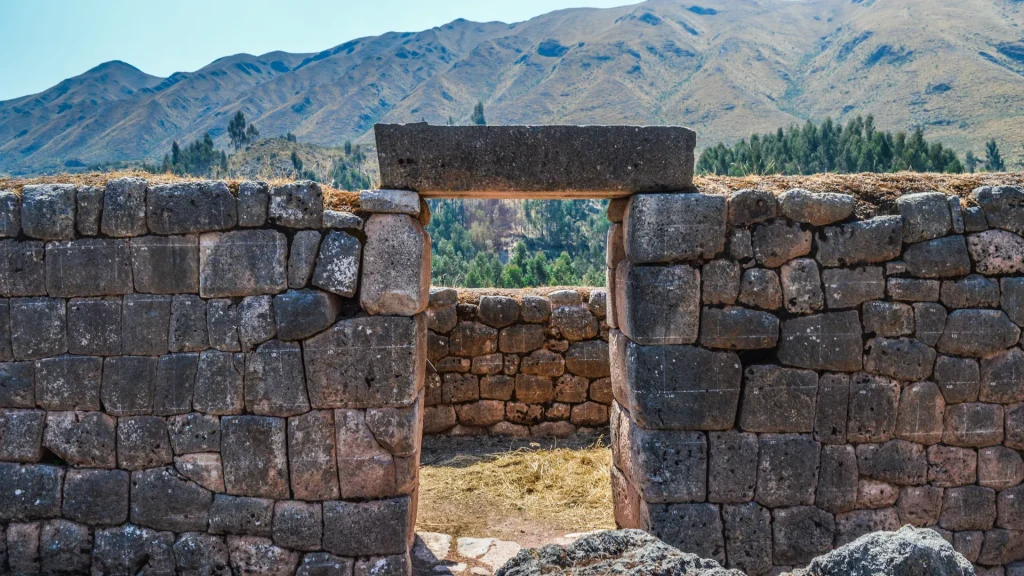
- Tipón: Inca terraces and water channels that the American Society of Civil Engineers (ASCE) recognized in 2008 as an International Historic Civil Engineering Landmark. Open from 7:00 to 16:30 (DDC).
- Pikillaqta: an administrative center of the Wari culture, earlier than the Incas. Open from 7:00 to 16:30 (DDC).
- Andahuaylillas: its church of San Pedro Apóstol is part of the Ruta del Barroco Andino (Andean Baroque Route), which has its own ticket, separate from the Tourist Ticket.
Tipón and Pikillaqta are included in circuit II of the Tourist Ticket. Our South Valley tour covers Tipón, Pikillaqta and Andahuaylillas in half a day.
Which ticket you need for each place
| Place | Entry | Opening hours |
|---|---|---|
| Sacsayhuamán, Q’enqo, Puka Pukara and Tambomachay | Tourist Ticket: circuit I partial ticket (S/ 70 foreigners, S/ 40 Peruvians) or full ticket | 7:00 – 17:30 |
| City museums, Tipón and Pikillaqta | Tourist Ticket: circuit II partial ticket (S/ 70 foreigners, S/ 40 Peruvians) or full ticket | Tipón and Pikillaqta: 7:00 – 16:30 |
| Cathedral | Archdiocese ticket: S/ 25 adults, S/ 12.50 students (fare registered by MINCETUR) | 10:00 – 18:00 |
| Qoricancha (temple) | Own entry ticket: S/ 20 adults, S/ 10 students | Mon – Sat 8:30 – 17:30; Sun 14:00 – 17:00 |
| Andahuaylillas | Ruta del Barroco Andino ticket | Check locally |
| Plaza de Armas, Hatun Rumiyoq, San Blas neighborhood | Free | — |
The full Tourist Ticket costs S/ 130 for foreigners and S/ 70 for Peruvians, is valid for 10 days and includes 16 sites: all three circuits, including the Sacred Valley one. If you plan to visit more than one circuit, it is usually worth it; all the fares and conditions are in Cusco Tourist Ticket 2026. These are the COSITUC fares in force in October 2026; the regulations of the new Tourist Ticket Law (Law 32586) are still under consultation, so they could change.
How many days you need
There is no official rule, but as a guide: in one day you can see the historic center and the four sites on the outskirts (the City Tour takes half a day). With two or three days you can add museums, San Blas, the Mercado San Pedro and the South Valley. And then come the Sacred Valley and Machu Picchu.
Keep the altitude in mind: the city is higher than the Sacred Valley and Machu Picchu; read how to prevent altitude sickness (soroche) and the best order to plan your trip in Altitude of Machu Picchu, Cusco and the Sacred Valley, and if you have not arrived yet, how to get from Lima to Cusco.
Festivals in Cusco
- Inti Raymi, 24 June: it is held on three stages, the Qoricancha, the Plaza de Armas (free) and Sacsayhuamán. It is organized by the Cusco Municipal Festivities Company (EMUFEC); buy grandstand tickets only through its official channel, because fake websites appear every year.
- Corpus Christi: the procession of saints and virgins goes around the Plaza de Armas. In 2027 the main day is Thursday 27 May.
- Señor de los Temblores (Lord of the Earthquakes): the procession of the patron of Cusco leaves the Cathedral on Holy Monday, which in 2027 is 22 March.
To plan your trip around public holidays, read Peru public holidays 2027: long weekends to visit Cusco and Machu Picchu. In the city it rains mostly from December to March, and in June and July nights drop below 0 °C (SENAMHI); more details in the best time to visit Machu Picchu.
Tips for your visit
- Bring your ID document: the Tourist Ticket is issued in your name, and it is requested when buying student fares.
- Carry cash in soles for the tickets paid separately, such as the Cathedral and the Qoricancha.
- At Sacsayhuamán and the other parks, the DDC does not allow food, alcoholic drinks or animals, climbing or painting the walls, camping, or flying drones without its authorization.
- Walk slowly on your first day: the streets of the center and San Blas are steep, and you are at nearly 3,400 m (11,155 ft).
Official sources (checked in October 2026):
- UNESCO, City of Cuzco and Political Constitution of Peru, article 49.
- MINCETUR tourism inventory: Cathedral, Qoricancha, San Blas neighborhood, Sacsayhuamán, Q'enqo, Puka Pukara, Tambomachay, Tipón and Pikillaqta.
- DDC Cusco: Saqsaywaman Archaeological Park and Cusco museums. Archdiocese of Cusco: religious circuit. Mercado San Pedro: Ministry of Culture.
- Tourist Ticket: COSITUC, fares and circuits; El Peruano (regulations of Law 32586). Ruta del Barroco Andino: official website. Museo de Arte Precolombino: official website.
- Inti Raymi: El Peruano (June 2026). Weather: SENAMHI, Climate Normals 1991–2020.
Frequently asked questions
What can I see in Cusco in one day?
The historic center (Plaza de Armas, Cathedral, Qoricancha, Hatun Rumiyoq street and San Blas) and the four Inca sites on the outskirts: Sacsayhuamán, Q'enqo, Puka Pukara and Tambomachay. The half-day City Tour covers the Cathedral, the Qoricancha and those four sites.
Does the Tourist Ticket include the Cathedral and the Qoricancha?
No. The Cathedral has the Archdiocese ticket and the Qoricancha temple has its own entry ticket. The Tourist Ticket does include the Qoricancha Site Museum.
How much is the entry to Sacsayhuamán?
You enter with the Cusco Tourist Ticket: the circuit I partial ticket costs S/ 70 for foreigners and S/ 40 for Peruvians, and also includes Q'enqo, Puka Pukara and Tambomachay. The full ticket costs S/ 130 and S/ 70 (10 days). COSITUC fares as of October 2026.
What are the opening hours of Sacsayhuamán?
From 7:00 to 17:30, according to the Decentralized Directorate of Culture of Cusco. These are the hours of the archaeological park, which includes Q'enqo, Puka Pukara and Tambomachay.
How much does it cost to enter the Qoricancha?
S/ 20 for adults and S/ 10 for students, Monday to Saturday from 8:30 to 17:30 and Sundays from 14:00 to 17:00, according to PromPerú (2026). It is not included in the Tourist Ticket.
Where is the Twelve-Angled Stone?
On Hatun Rumiyoq street, a few blocks from the Plaza de Armas. It is part of the Inca wall on which the Archbishop's Palace stands, and you can see it for free from the street.
How many days do I need to see Cusco?
As a guide, one day for the historic center and the Inca sites on the outskirts, and two or three days if you want to add museums, San Blas, the Mercado San Pedro and the South Valley. After that come the Sacred Valley and Machu Picchu.