

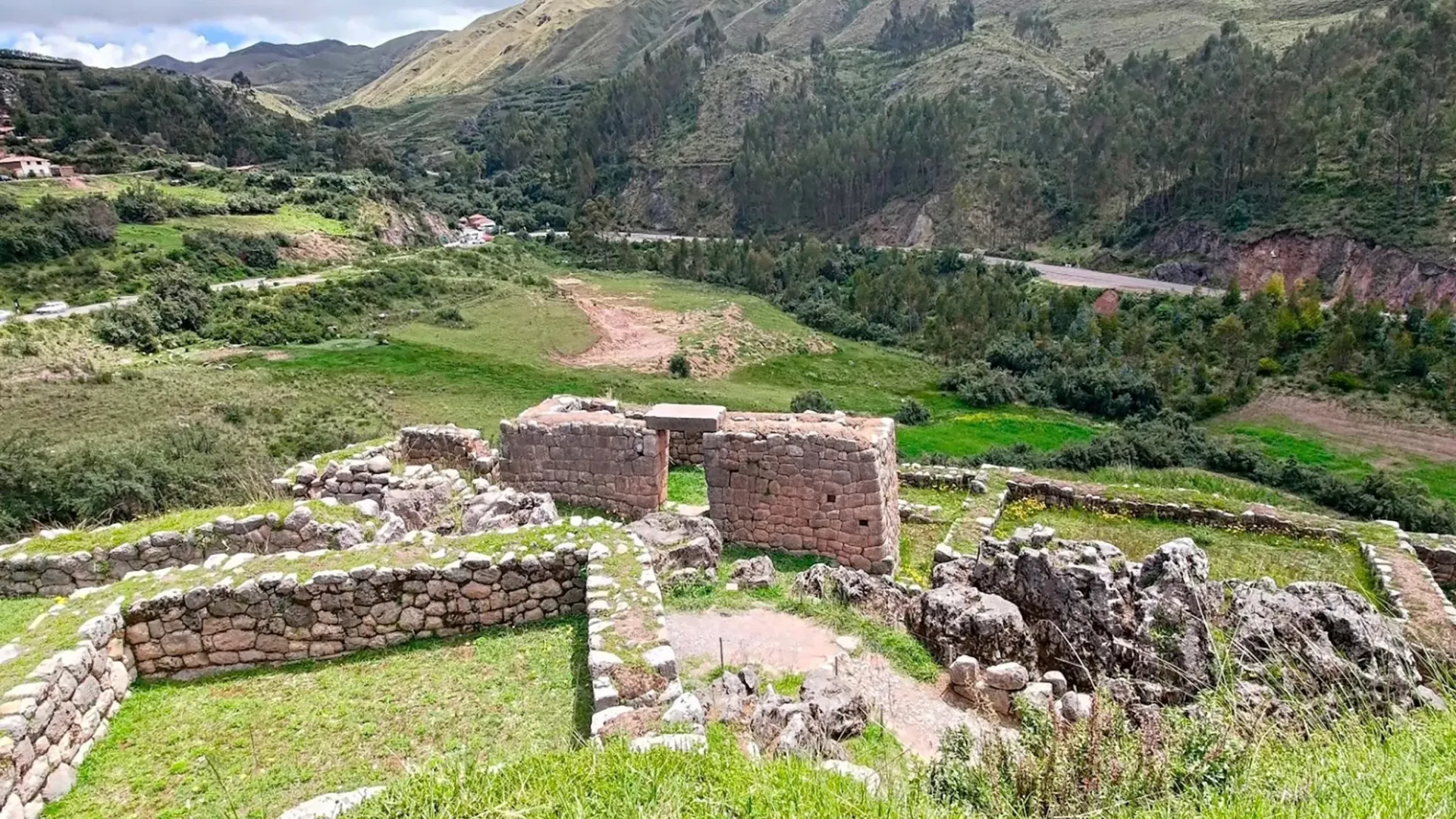
Sacsayhuamán (Saqsaywaman) stands above the city of Cusco, about 2 km from the Plaza de Armas, at an altitude of 3,700 m (12,139 ft). It is famous for its zigzag walls of giant stones, but more than a fortress it was a large ceremonial complex that the Incas called the “Casa del Sol” (House of the Sun). It is open from 7:00 to 17:30 and is visited with the Cusco Tourist Ticket, which also includes Q’enqo, Puka Pukara and Tambomachay. Here is what to see, the ticket you need, how to get there and when to go.
Data as of 26 October 2026. Opening hours and rules from the Decentralized Directorate of Culture of Cusco (DDC), fares from COSITUC and the description of the sectors from the park’s Master Plan, by the Ministry of Culture. The official sources are listed at the end of the article.
- 7:00 – 17:30opening hours of the archaeological park, every day
- 90 – 125 tweight of the blocks of its main walls
- 720,244visitors between January and September 2025
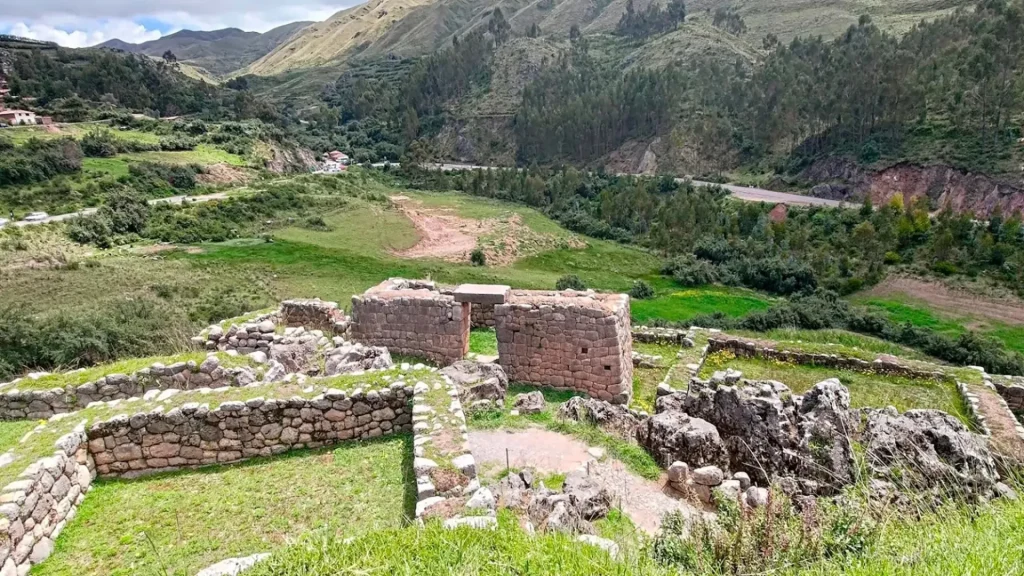
What is Sacsayhuamán: fortress or temple?
According to the DDC Cusco, its construction began under the Inca Pachacuteq and was continued by Túpac Inca Yupanqui, Huayna Cápac and Huáscar. It was consecrated as the House of the Sun of Hanan Qosqo, the upper part of Cusco, and it was the most important place after the city itself.
The park’s Master Plan, approved by the Ministry of Culture in 2024, sets out three hypotheses about its function: fortress, shrine to the god Illapa or House of the Sun. It quotes the chronicler Cieza de León, who wrote that the natives called it “house of the sun” and the Spaniards “fortress”, because Manco Inca turned it into a fortress during the great siege of Cusco against the Spaniards. After the conquest, many of its stones were reused in the city’s churches and mansions.
Its name is usually translated as “satisfied falcon”, although the Master Plan itself notes that its meaning is still debated. It is one of the most visited sites in Peru: it received 720,244 visitors between January and September 2025, according to MINCETUR data reported by Andina.
What to see at Sacsayhuamán
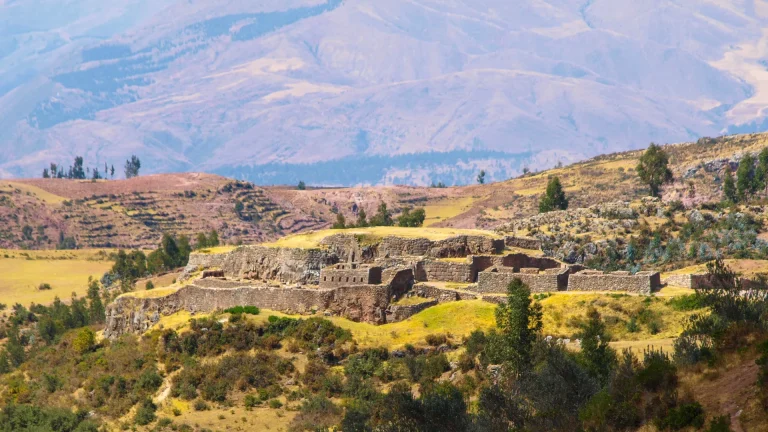
The monumental area brings together the walls, the upper part of Muyuqmarka, the Rodadero (natural slide) and the Chincanas, around a large esplanade. These are its sectors, according to the Master Plan and MINCETUR:
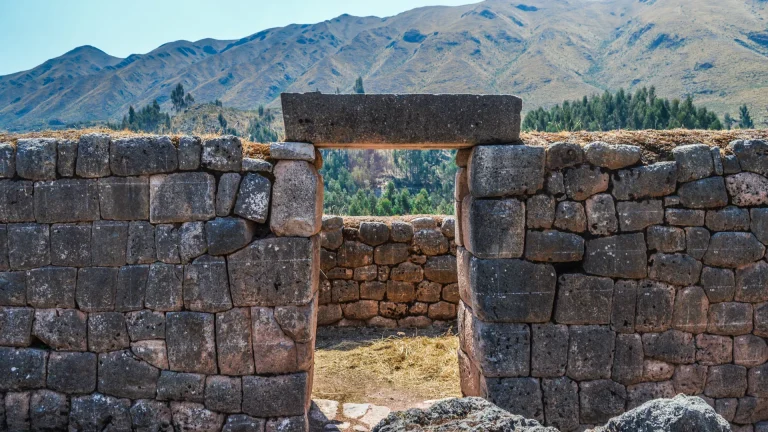
- The zigzag walls: three superimposed retaining walls in a zigzag shape that recalls a lightning bolt. The first is the most impressive: its blocks weigh between 90 and 125 tonnes, and the largest is over 8.5 m (28 ft) tall.
- Muyuqmarka: on the upper platform stood three towers, according to Garcilaso de la Vega: Muyuqmarka, which was round, and Paucarmarka and Sallaqmarka, which were square. Today only their foundations remain.
- Suchuna and the Trono del Inca (Inca’s Throne): to the north of the esplanade, a rock outcrop with wavy surfaces that form a natural “slide”. It has stepped carvings known as the Inca’s Throne and a reflecting pool carved into the rock.
- Chincana Chica and Chincana Grande: carved rocks with narrow passages, niches and seats; the Chincana Chica has a passage about 20 m long, and the Grande has animal figures in high relief.
- Qhapaq Qocha: a large circular reservoir with niches, fed by a system of carved channels and fountains.
The Master Plan warns that the constant flow of visitors wears down the rock of Suchuna and the Chincanas: avoid sliding down the Rodadero. In the same park, outside the ticket circuit, is Amaru Markawasi, known as the Templo de la Luna (Temple of the Moon), and in December 2024 the DDC reopened a 2.71 km Inca ritual path between Llaullipata and Ñustapakana.
Sacsayhuamán tickets: price and Tourist Ticket
Sacsayhuamán has no individual entry ticket: you visit it with the Cusco Tourist Ticket, which includes it in circuit I together with Q’enqo, Puka Pukara and Tambomachay.
| Ticket | Foreigners | Peruvians |
|---|---|---|
| Circuit I partial ticket (4 sites) | S/ 70 · 5 days | S/ 40 · 1 day |
| Full ticket (16 sites, 3 circuits) | S/ 130 · 10 days | S/ 70 · 10 days |
| Full student ticket | S/ 70 · 10 days | S/ 40 · 10 days |
Student fares exist only for the full ticket. According to MINCETUR, people from Cusco and residents enter free with their DNI (national ID). These are the COSITUC fares in force in October 2026; the regulations of the new Tourist Ticket Law (Law 32586) are still under consultation, so they could change. Where to buy it and all the circuits: Cusco Tourist Ticket 2026.
How to get there from the Plaza de Armas
- On foot: about 2.5 km along Suecia street and the San Cristóbal neighborhood, some 20 to 30 minutes uphill. The park is also connected on foot with the San Blas neighborhoods (Toqocachi).
- By car: there are two paved roads, from Saphy street to the Llaullipata sector, the main entrance, or along the Avenida de Circunvalación, which crosses the park towards the Sacred Valley.
- On a tour: the half-day Cusco City Tour visits Sacsayhuamán, Q’enqo, Puka Pukara and Tambomachay with a guide and transport, as well as the Cathedral and the Qoricancha. You can also ride through the four sites on horseback on the Cusco City Tour on horseback.
When to go and how much time to allow
According to the Master Plan, the busiest hours are from 11:00 to 13:00 and from 15:00 to 17:30: if you want to see it with fewer groups, arrive early. Allow one or two hours for the monumental area and half a day for the four circuit I sites. In Cusco it rains mostly from December to March (SENAMHI).
It is at 3,700 m (12,139 ft), higher than the Plaza de Armas: walk up slowly, especially if you have just arrived (read how to prevent altitude sickness, or soroche, in Altitude of Machu Picchu, Cusco and the Sacred Valley).
Inti Raymi and other celebrations
- Inti Raymi, 24 June: the main ceremony of the Festival of the Sun is held on the Sacsayhuamán esplanade, after the events at the Qoricancha and the Plaza de Armas. It is organized by the Cusco Municipal Festivities Company (EMUFEC); in 2026 grandstand seats cost from S/ 490 to S/ 850 and sold out. In 2025 the DDC opened the Suchuna and Cruz del Papa sectors without tickets and closed other areas to protect them. Buy only through the official channel.
- Warachikuy: a free, open-air re-enactment that the Colegio Nacional de Ciencias del Cusco school has staged on the esplanade since 1968, on the third Sunday of September. The Ministry of Culture declared it of cultural interest.
- Visit of Pope Leo XIV, 15 November 2026: according to the official program, at 10:30 he will hold a meeting with the faithful in the Saqsaywaman Archaeological Park. Expect access restrictions that day.
To plan your trip around public holidays, read Peru public holidays 2027: long weekends to visit Cusco and Machu Picchu.
Rules and tips for your visit
- The DDC does not allow food, alcoholic drinks or animals, climbing or painting the walls, camping, or flying drones or filming for commercial purposes without its authorization.
- Bring water, sunscreen and a jacket: the park is open and has no cafeteria. There are basic restrooms at Llaullipata, the main entrance.
- The entrance is level, but inside the park there are slopes and stairways.
- Bring your ID document with the Tourist Ticket, which is issued in your name. There are no official night visits.
To see the rest of the city, read things to do in Cusco.
Official sources (checked in October 2026):
- DDC Cusco, Saqsaywaman Archaeological Park (history, opening hours, access and rules). Ministry of Culture, Master Plan of the Saqsaywaman National Archaeological Park 2024–2030 (description of the sectors).
- MINCETUR tourism inventory: Sacsayhuamán. Visitors in 2025: MINCETUR, cited by Andina.
- Tourist Ticket: COSITUC, fares and El Peruano (regulations of Law 32586).
- Ministry of Culture: Qorikancha – Ñustapakana ritual path, Warachikuy and Inti Raymi 2025. El Peruano: Inti Raymi 2026 and program of the papal visit.
Frequently asked questions
How much is the entry to Sacsayhuamán?
You enter with the Cusco Tourist Ticket. The circuit I partial ticket costs S/ 70 for foreigners (5 days) and S/ 40 for Peruvians (1 day), and also includes Q'enqo, Puka Pukara and Tambomachay. The full ticket costs S/ 130 and S/ 70 (10 days). COSITUC fares as of October 2026.
What are the opening hours of Sacsayhuamán?
From 7:00 to 17:30, every day, according to the Decentralized Directorate of Culture of Cusco. There are no official night visits.
Can you walk to Sacsayhuamán?
Yes. From the Plaza de Armas it is about 2.5 km along Suecia street and San Cristóbal, some 20 to 30 minutes uphill. Walk up slowly because of the altitude.
Was Sacsayhuamán a fortress?
More than a fortress, it was a ceremonial complex that the Incas called the "House of the Sun". The Spaniards called it a fortress because Manco Inca used it as one during the siege of Cusco.
How much do the stones of Sacsayhuamán weigh?
The blocks of its main walls weigh between 90 and 125 tonnes, and the largest is over 8.5 m (28 ft) tall, according to the Ministry of Culture and MINCETUR.
How much time do you need to visit Sacsayhuamán?
One or two hours for the monumental area, and half a day if you add Q'enqo, Puka Pukara and Tambomachay, which are included in the same ticket.
When is the Inti Raymi at Sacsayhuamán?
Every 24 June. The main ceremony is held on the Sacsayhuamán esplanade, after the events at the Qoricancha and the Plaza de Armas. Grandstand tickets are sold by EMUFEC through its official channel.