

The Sacred Valley of the Incas is the valley of the Vilcanota River, also called the Urubamba, between the city of Cusco and Machu Picchu. You can tour it in one day from Cusco: Chinchero is 30 km away and Pisac 33 km. Its most visited places are Pisac, Chinchero, Moray, the Maras Salt Mines and Ollantaytambo. To enter the four archaeological parks (Pisac, Chinchero, Moray and Ollantaytambo) you need the Cusco Tourist Ticket (Boleto Turístico del Cusco); the Maras Salt Mines are paid separately. In this guide we tell you what to see at each place, the official opening hours, how much the ticket costs and how to get there.
Data as of 19 October 2026. Opening hours, altitudes and distances are those published by the Decentralized Directorate of Culture of Cusco. The official sources are listed at the end of the article.
- More than 350archaeological sites in the valley, according to its declaration as Cultural Heritage of the Nation
- S/ 70Partial Sacred Valley Tourist Ticket for foreign visitors, valid for 2 days
- 1 h 30 minapproximately from Cusco to the valley, by bus or car
What the Sacred Valley is and where it is
The Sacred Valley is the stretch of the Vilcanota River that the Incas called Willcamayu. It was declared Cultural Heritage of the Nation in 2006 as an archaeological and historical cultural landscape: it runs from Huambutío to Piscacucho, covers the provinces of Urubamba, Calca, Paucartambo, Anta and Quispicanchis, and includes three archaeological parks (Pisac, Chinchero and Ollantaytambo) and more than 350 archaeological sites.
Pisac is in the province of Calca; Chinchero, Moray, Maras, Urubamba and Ollantaytambo are in the province of Urubamba. Urubamba is the largest town in the valley, and Ollantaytambo, at the end of the route, is the starting point of the train to Machu Picchu.
What to see in the Sacred Valley
| Place | Altitude | Distance from Cusco | Opening hours | Entry |
|---|---|---|---|---|
| Pisaq Archaeological Park | 3,400 m | 33 km to the town and 9 km more to the park | 7:00 – 16:30 | Tourist Ticket |
| Chinchero Archaeological Park | 3,750 m | 30 km | 7:00 – 18:00 | Tourist Ticket |
| Moray | 3,480 m | 7 km from the town of Maras | 7:00 – 17:00 | Tourist Ticket |
| Maras Salt Mines | — | — | — | Separate, not included in the ticket |
| Ollantaytambo Archaeological Park | 2,860 m | 61 km via Chinchero or 92 km via Pisac | 7:00 – 16:30 | Tourist Ticket |
Altitudes are averages for each park. The Maras Salt Mines are not a Ministry of Culture park and have their own entry fee and opening hours: the details are in our Maras and Moray guide.
Pisac
It stands at the entrance to the valley. Its archaeological park, high on the mountain, is considered a royal estate of the Inca Pachacútec and his panaca: farming terraces and domestic and ceremonial buildings. Below, the town has a Sunday market that is one of the largest and most colorful in the region. The park is reached by stairways carved into the rock, so it is not accessible for people with reduced mobility.
Chinchero
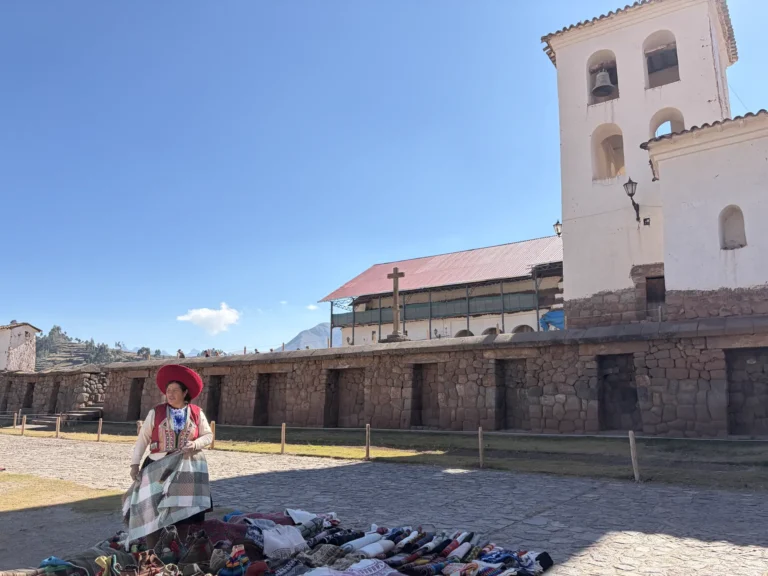
It is the highest point of the route, at 3,750 m. It has the remains of the palaces of the Inca Túpac Yupanqui, with stone walls, enclosures and terraces, and on top of them the colonial church of Our Lady of the Nativity (originally of Monserrat), with paintings and altarpieces. The town keeps a strong weaving tradition with natural dyes and also has a Sunday market.
The park, the church, the textiles and how to get there: what to see in Chinchero.
Moray
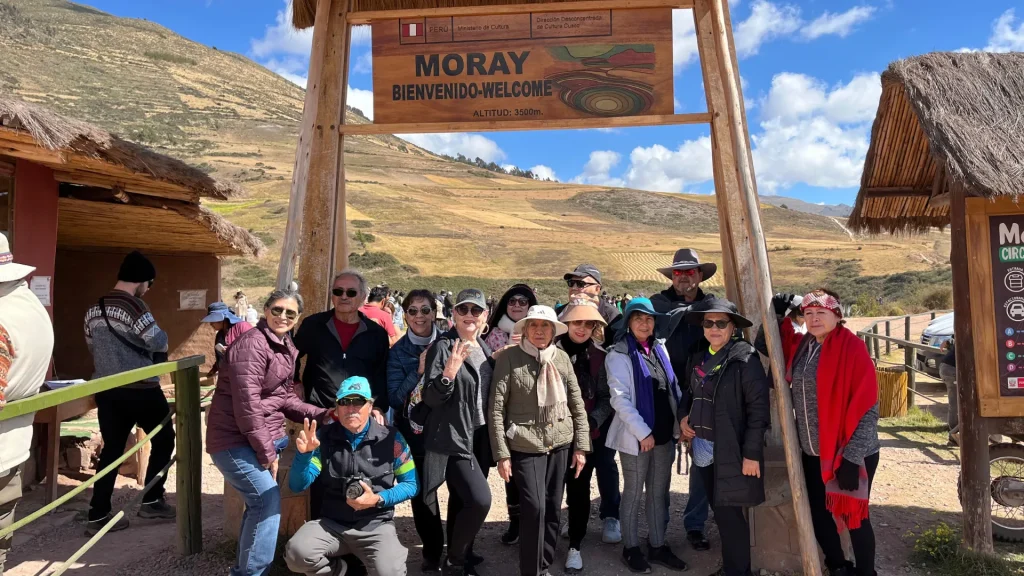
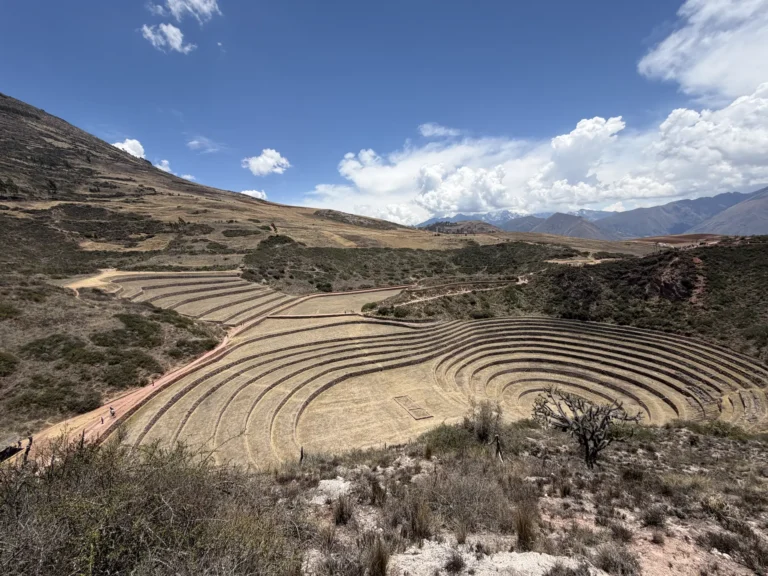
Its circular terraces, like amphitheaters in the earth, were an Inca center for agricultural experimentation: they made use of the different ecological levels to extend the farming frontier. It is in the community of Mullak’as Misminay, 7 km from the town of Maras. As in all the parks, climbing the walls is forbidden. More about Moray and the Salt Mines in our Maras and Moray guide.
Maras Salt Mines
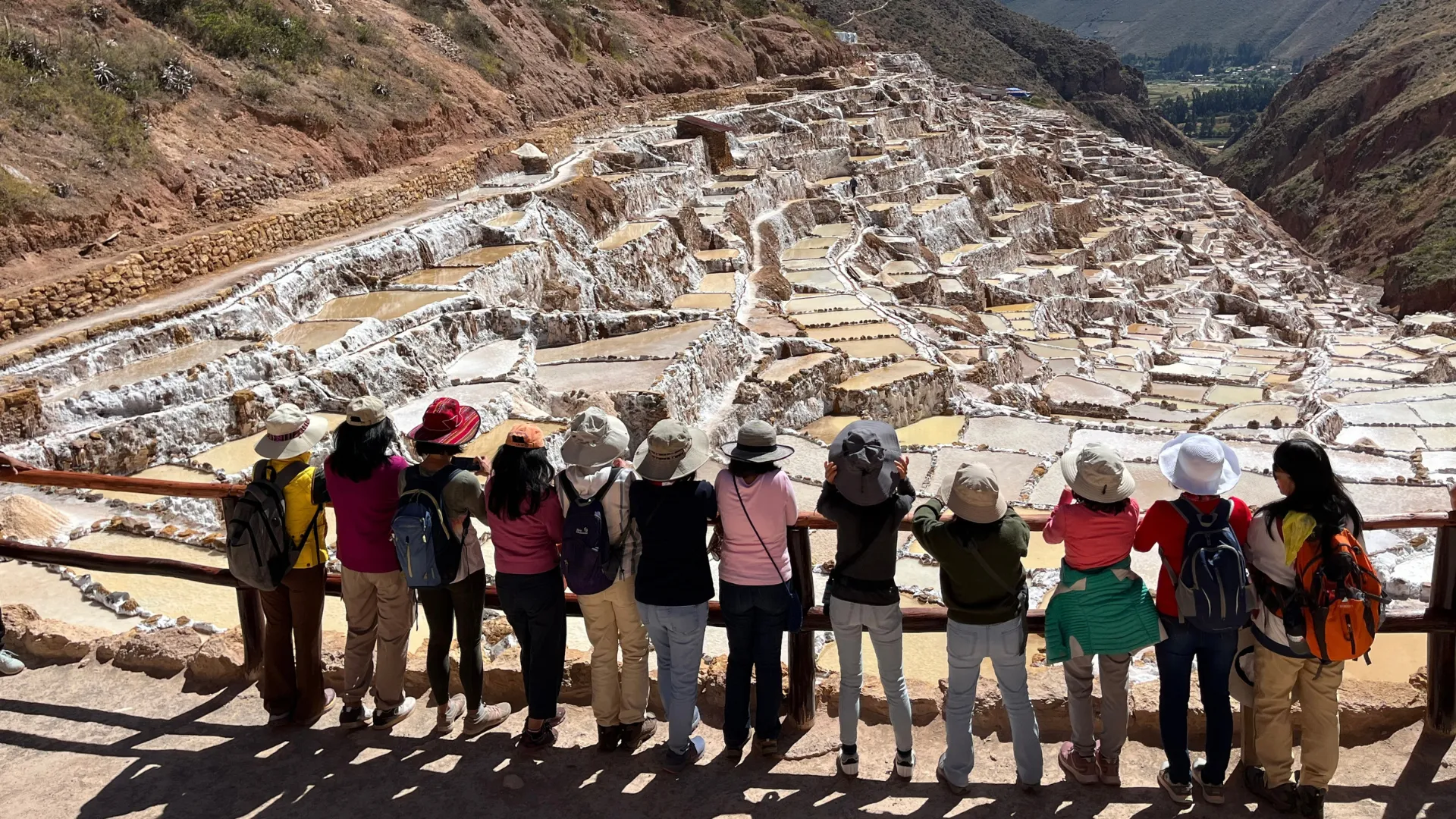
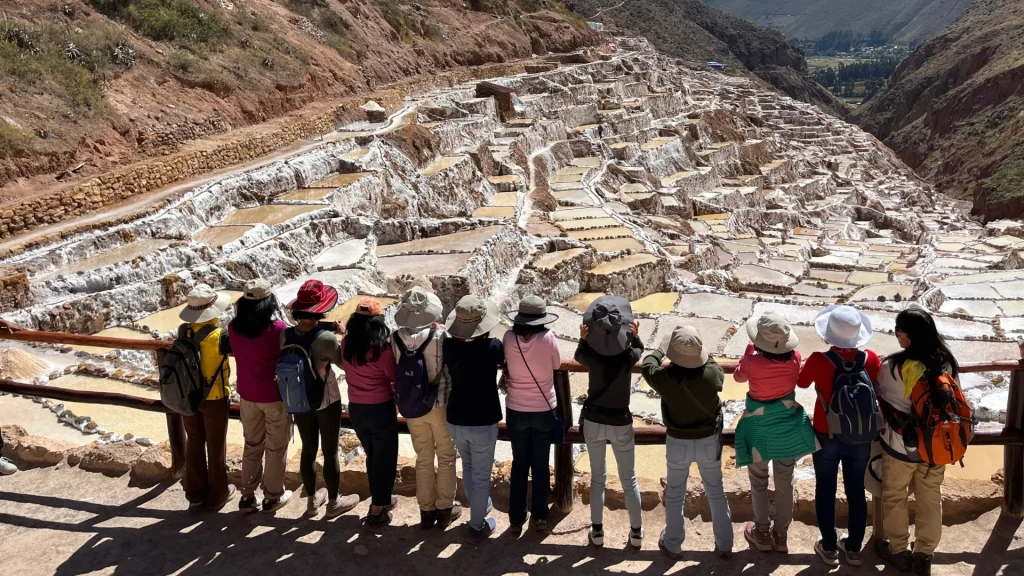
They are salt pans of pre-Hispanic origin on the slope of Qaqawiñay hill, fed by a saltwater spring. They are managed by the communities of Maras and Pichingoto. Since 15 June 2019 you can no longer walk among the salt pans: the visit goes as far as the viewpoint, because the salt is for human consumption. The entry fee is not included in the Tourist Ticket and is paid on site.
Ollantaytambo
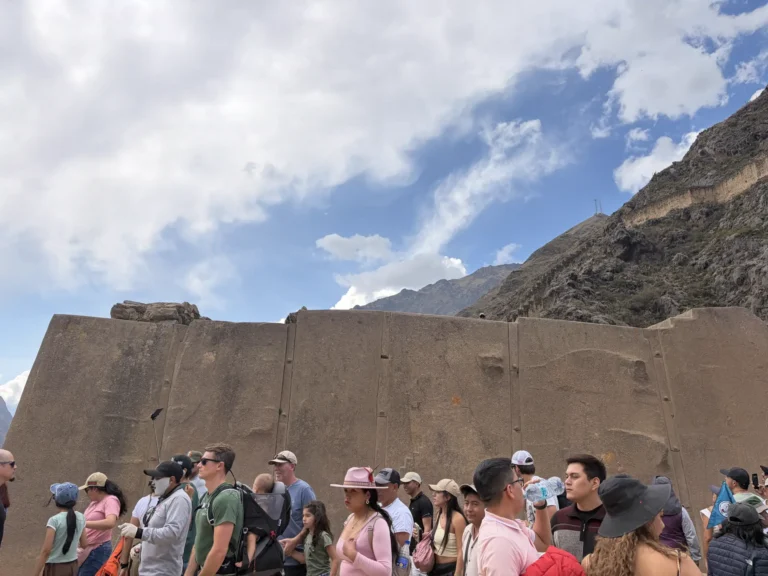
It is an Inca city planned for the nobility, with two sectors, Qosqo Ayllu and Araccama Ayllu, and a large complex of terraces, storehouses and walls. In 2021 UN Tourism named it one of the Best Tourism Villages in the world. The train to Machu Picchu Pueblo leaves from its station and takes approximately 1 h 30 min, according to PeruRail. It has a short, flat circuit with a ramp at the entrance, about 35 minutes long.
What to see in the park and the town, Pinkuylluna and Inti Punku (both free) and the train: what to see in Ollantaytambo.
Entry: the Tourist Ticket in the Sacred Valley
Pisac, Chinchero, Moray and Ollantaytambo make up Circuit III of the Cusco Tourist Ticket. Individual entry tickets are not sold: if you want to visit only one, you buy the partial ticket for that circuit. These are the fares of COSITUC, the body that manages it:
| Ticket | Includes | Validity | Foreign visitors | Peruvians |
|---|---|---|---|---|
| Partial Sacred Valley (Circuit III) | Pisac, Chinchero, Moray and Ollantaytambo | 2 days for foreign visitors · 1 day for Peruvians | S/ 70 | S/ 40 |
| Full (Integral) (Circuits I, II and III) | 16 places in Cusco, including the valley | 10 days | S/ 130 · students S/ 70 | S/ 70 · students S/ 40 |
All ticket types, the 16 places it includes and its conditions are in our article Cusco Tourist Ticket 2026.
- Where to buy it: it is not sold online. You buy it at the office at Av. El Sol 103, in Cusco (every day from 7:30 to 18:00), or at the entrance to each park in the valley.
- Validity: it starts counting from the moment of purchase, so it is best to buy it on the same day you start your visits.
- Machu Picchu is not included: it has its own entry ticket.
In May 2026 the new Tourist Ticket Law (Law 32586) was approved, which provides for a digital ticket. Its regulations were under public consultation in October 2026, so prices and the way to buy it may change: check the current fare before you travel.
How to get to the Sacred Valley from Cusco
From central Cusco it takes approximately 1 h 30 min by bus or car. There are two paved roads to Ollantaytambo: via Chinchero and Urubamba (61 km) or via Pisac, Calca and Urubamba (92 km). So you can enter the valley on one side and return on the other: our Classic Sacred Valley tour, for example, starts in Pisac and ends in Chinchero.
- Public transport: there are minibuses and colectivos from Cusco to Pisac, Calca, Chinchero and Urubamba. We do not publish fares or stops because there is no up-to-date official data.
- Train: PeruRail also runs through the valley. From Poroy station, in Cusco, the train takes approximately 1 h 10 min to Urubamba and 1 h 40 min to Ollantaytambo.
- Tour: the simplest way to see several places in one day, with transport and a guide.
Roadworks in Ollantaytambo (2026). Since 13 April 2026 traffic has been restricted in the historic center of Ollantaytambo for about 8 months, and the only access to the train station is via the Araccama – Rumira section. PromPerú recommends allowing 15 to 20 extra minutes in low season and 30 to 45 extra minutes in high season to get to the train.
How many days do you need?
In one day from Cusco you can see the main places. Full-day tours choose between more time at each place or more places on the same day: you can compare the Classic Sacred Valley and the VIP Sacred Valley tours on our Sacred Valley tours page. If you are only interested in Moray and Maras, there is a half-day tour.
With two days you can tour the valley and continue to Machu Picchu: the train leaves from Ollantaytambo, you sleep in Machu Picchu Pueblo and visit the citadel the next day, as on the 2-day Sacred Valley and Machu Picchu tour. For foreign visitors, the partial valley ticket is valid for 2 days, so you can also spread your visits over two days.
When to go
The valley can be visited all year round. In Urubamba, in the heart of the valley, average highs range from 22 to 24 °C and lows drop to about 2 °C in July, according to the SENAMHI 1991–2020 climate normals: days are mild and nights are cold. Rain is concentrated from December to March (72 to 105 mm a month in Urubamba), and from May to September it hardly rains (less than 10 mm a month). In Ollantaytambo, visitor numbers are highest from June to December, according to the Ministry of Culture.
If you are interested in festivals, the Festival of the Virgen del Carmen of Pisac was declared Cultural Heritage of the Nation in 2014.
Rules and tips for your visit
In the archaeological parks of the Cusco Directorate of Culture you are not allowed to:
- enter with food or animals;
- climb, paint or damage the walls;
- fly drones without authorization from the Directorate of Culture;
- drink alcohol, camp, or film or take photos for commercial purposes without a permit.
Respect the opening hours too: Pisac and Ollantaytambo close at 16:30. Bring soles in cash for your purchases and for the Maras Salt Mines entry, sunscreen and something warm for the afternoon. If you want to see the Pisac or Chinchero markets at their best, go on a Sunday.
On your own or with a tour?
On your own you have to combine transport between towns that are tens of kilometers apart with the closing times of each park. With a tour you get hotel pickup, transport, a guide and a buffet lunch in Urubamba in a single booking. Compare the options in Sacred Valley tours from Cusco and, if you are continuing to Machu Picchu, read our guide to visiting Machu Picchu.
Official sources (checked in October 2026):
- Decentralized Directorate of Culture of Cusco, park pages (updated 29 December 2025): Pisaq, Chinchero, Moray and Ollantaytambo.
- National Directorial Resolution (Resolución Directoral Nacional) No. 988/INC (2006), declaration of the Sacred Valley of the Incas: Ministry of Culture.
- Cusco Tourist Ticket, fares and frequently asked questions: COSITUC. Law No. 32586: El Peruano and consultation on the regulations.
- Maras Salt Mines: Andina (2019). Towns and markets of the valley: Andina (2026).
- Climate: SENAMHI, standard and mean climate normals 1991–2020 (Urubamba station). Travel times and roadworks in Ollantaytambo: PromPerú and Y tú qué planes. Trains: PeruRail. Best Tourism Villages 2021: UN Tourism.
Frequently asked questions
Where is the Sacred Valley of the Incas?
In the Cusco region, along the Vilcanota (or Urubamba) River, between the city of Cusco and Machu Picchu. Chinchero is 30 km from Cusco and Pisac 33 km; it takes approximately 1 h 30 min by bus or car.
Which Sacred Valley sites does the Tourist Ticket include?
Circuit III of the Cusco Tourist Ticket includes Pisac, Chinchero, Moray and Ollantaytambo. The Maras Salt Mines are not included and are paid separately.
How much does the Sacred Valley Tourist Ticket cost?
In 2026, the partial Sacred Valley ticket costs S/ 70 for foreign visitors (valid for 2 days) and S/ 40 for Peruvians (valid for 1 day). The full ticket (integral), with 16 places in Cusco, costs S/ 130 for foreign visitors and S/ 70 for Peruvians.
Can you buy the Tourist Ticket online?
No. It is bought in person at the office at Av. El Sol 103, in Cusco, or at the entrance to each park in the valley. Its validity starts counting from the time of purchase.
Can you walk through the Maras Salt Mines?
No. Since 15 June 2019 the visit goes as far as the viewpoint and you cannot enter the salt pans, because the salt is for human consumption.
What time do the Sacred Valley sites open?
They all open at 7:00. Pisac and Ollantaytambo close at 16:30, Moray at 17:00 and Chinchero at 18:00, according to the Cusco Directorate of Culture.
How many days do you need for the Sacred Valley?
One day from Cusco is enough for the main places. With two days you can continue by train from Ollantaytambo to Machu Picchu and visit it the next day.